

Nations & City-States
What follows is an A-Z of nations and city-states. In many cases the rulers of these states are named herein. For info on most of those characters see Personages of Fame & Infamy.
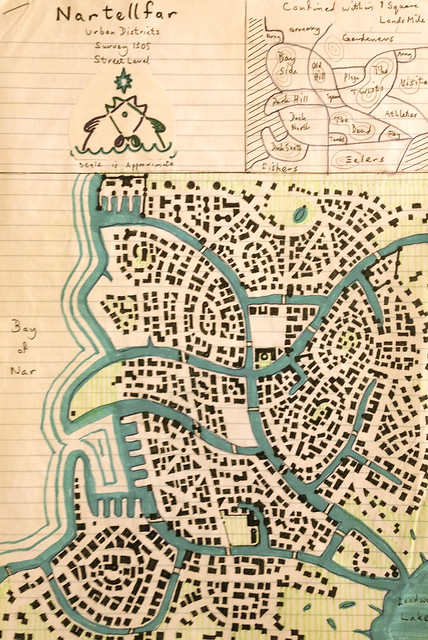 Scroll if you will half way down for news on this city-state of Nartellfar...
ALLMEET
The Valley Garrison of Allmeet
Ruler: The Custodian of Allmeet
Subjects: All permanent residents and current garrison staff
Notes: The beautiful Valley of Allmeet rests in the foothills just south of the Border Mountains. Within is located a settlement which houses the garrison of Allmeet. It polices the overland way between Westara and the Eastern Expanse. The population is constantly changing in composition and the settlement has the sort of diversity one would expect of a city. The valley occasionally faces forays from Border Mountains Orcs or bandits but is always well-prepared to repel such attacks. The Custodian is a vassel to both the Keeper of Bordenia and the Protector of Rolania and holds the title of Duke or Duchess in both nations. They rule as a military officer but consult regularly with key locals. The well-defended keep dungeons are known as The Vault and house riches deemed the property of two states. The current Custodian is Stanislas Half-Elven. Allmeet is considered a fine locale for rest and recreation among travellers. The Breezy Inn (till recently named the Dismembered Orc) boasts a huge selection of beverages. At every Equinox the vale hosts the popular Races of Allmeet - running contests separated by both kind and habitat (Humans run in a field while Elves traverse a coppice and Dwarves overcome a hillock).
BORDENIA
The Convergent Estates of Bordenia
Ruler: The Lord-Keeper or Lady-Keeper of Bordenia
Governing Body: The Court of Electors
Subjects: All Humans of Eriman speech residing within Bordenia
History: At the end of the Age of Tumult the two warring factions of the former Empire of Erimania were left shattered. The royal family by this time was utterly extinct. Of the many scattered estates that survived most entered into two groupings for self-defence. The grouping east of the Border Mountains became the Convergent Estates of Bordenia. As none of the nobility could agree on a new ruling family it was decided to establish an elective form of monarchy.
Government: The Court of Bordenia has 27 members called electors. 18 of the members are the barons and baronesses who rule the 18 separate estates (the nobility rule these estates and baron or baroness is an hereditary role passed to the eldest child). The other nine members are the patriarchs and matriarchs of the nine churches in Bordenia (dedicated respectively to Olarin, Urala, Kandoth, Nitara, Bernali, Teloch, Elchemar, Linesa, and the Deliverer) which also possess land-holdings. The Court meets once every twelve months to advise the Lord or Lady Keeper on matters of national significance. They can also meet more frequently if the Keeper calls it or a majority of the electors petition for it. On the death of a Keeper the twenty seven electors must choose a new monarch from among the eighteen barons and baronesses. Eligibility conditions include membership of the warrior calling (which one must be as a lord or lady) and having a spouse also of the nobility. It is important for the Keeper to have a spouse because he or she (the Keeper Consort) must act as ruler in the absence of the Keeper (including absence resulting from death till a new Keeper can be selected). The current Lord-Keeper is Adalard III. The emblem of Bordenia is an heraldic eagle and a sword.
Notes: Bordenia has a Compact of Defence with Rolania (which includes co-ownership of the citadel of Allmeet). It also has a Peace Pact with neighbouring Rovnara. Bordenia is a land of wide pastures, rugged hills, woodland, villages and keeps. Its most famed products are yolk sauces, timber and stone carvings. Its capital city of Borfur sits within a vale formed by a horseshoe-shaped hill lined with fortifications. The Keeper nominally resides in the fortress of Old Stony which is known for its looming presence and its accompanying hedge maze. Despite this the vice-regal retinue tours the provinces over the course of eighteen months.
DELMISAR
The Republic of the League City of Delmisar
Rulers: The Chancellor & Deputy Chancellor
Governing Body: The Forum of Delmisar
Citizens: All adult residents of Delmisar who take the Declaration of Loyalty (if of whole or part Human, Elf, Dwarf or Halfling blood).
History: The second largest of the three Sea Cities was also the second to have removed the rule of gentry. Following the successful revolt in Nartellfar the monarchy removed its capital to Delmisar and became more oppressive than it had been. Guilds were banned due to the key role they had played in challenging aristocratic power. As such the resistance that formed in Delmisar was an amorphous and clandestine association of residents and once they succeeded in ending aristocratic rule they established a form of government in which the citizen (rather than the guild) was the fundamental unit of political power. The emblem of Delmisar is a navigational star over a stone gateway.
The Forum: The Forum comprises 40 representatives elected once every five years from as many wards (25 in the city and 15 in the surrounding farmland). Citizens can vote and contest election from the age of 20. Technically all decisions of government are made by majority vote of the Forum. However in practice much power has transferred over time to two institutions – one is the factions and the other is the offices of Chancellor and Deputy Chancellor. Originally factions shifted and changed from issue-to-issue but nowadays there are three entrenched factions whose decision-making processes exist both internal and external to the Forum. The three factions are the Lawfuls, the Temperates, and the Chaotics (named somewhat pejoratively for how much they feel government can enter into the lives and livelihoods of citizens). The numbers of these factions in the Forum determines who holds power. Present representation is as follows:
Chaotics - 11 Urban Reps - 6 Rural Reps - 17 Reps Total
Lawfuls - 9 Urban Reps - 5 Rural Reps - 14 Reps Total
Temperates - 5 Urban Reps - 4 Rural Reps - 9 Reps Total
The Forum also preserves and collects books for public perusal and the Forum Library is a renowned destination for locals and visitors alike.
The Chancellor & Deputy Chancellor: The other practice that has taken power away from the Forum is that of the Chancellor and Deputy Chancellor. Both office-holders have become ex-officio members of the Council of Eight which manages the League of Lasting Peace & Prosperity (its membership comprises the two Consuls of Nartellfar, the Chancellor and Deputy Chancellor of Delmisar, the Monarch and Prime Minister of Orvilia, and the Admiral and General of the combined Sea Cities Navy and Army). It is this development that paved the way for making these two roles more important than all other Representatives. Once they were recognized as the executive officers of Delmisar by an international document they then came to be deemed as such in domestic practice too. In sittings of the Forum the Chancellor and Deputy may be seen as only facilitating debate and counting votes but in practice they have power between them to select all the ministers of government and more say than most in factional decision-making. Long standing practice sees the Chancellor drawn from the largest faction and the Deputy Chancellor drawn from whichever other faction chooses to support the largest faction to have a Forum majority. The current Chancellor is Ivar Chandler of the Chaotics and the Deputy Chancellor is Jovita Weller of the Temperates.
Urban Geography: The city sits on a small inlet on the bay-side of the Nar Peninsula on smooth even former pastureland. Even at the time of the revolt the city had long since exceeded the confines of its ancient walls and following the formation of republican rule the old wall and its towers were dismantled to use the bricks in the construction of new civic structures and public housing. However the Old Gate was left standing. It was under the Old Gate that the monarch at the time of the revolt was executed with a mob looking on. As such the Old Gate is both a revered site for the republican citizens of Delmisar but also for the small minority of residents who wish for the return of the monarchy. On every anniversary of the revolt there is celebration in the Civic Square but at the Old Gate close by there are clashes between royalist and republican hotbloods which the City Guard must quash.
FARPORT
The Free and Prospering City of Farport
Ruler: The Triumvirate
Citizens: All tax-payers residing in Farport (including its peninsula)
Notes: This city is populated by Humans of Lehenic kin as well as the many others who temporarily stay in this prosperous trading centre. Its permanent residents number fewer than that of Nerina City but its total population during the Festival of Sails makes it the most populous known. During this month of celebrations and trading more money changes hands than in any other part of The Lands. The emblem of Farport is a sailing ship.
Government: Farport was once part of the Empire of Nerina till it refused to pay its taxes and put the funds thus saved into developing a military to ensure its freedom. The city is now ruled by The Triumverate – a three member body consisting of the three richest men and women in Farport. All one has to do to be in the Triumvirate is to be declared by the Farport Treasury as one of the three richest who is also recognized as a resident by the Census Office. One then must accept the position and swear an oath of service to the City of Farport. The composition of the Triumvirate changes regularly as the Treasury assesses wealth annually. Triumvirate decisions must be by majority in cases of military emergency and unanimous for all other matters. The richest merchants are considered the best rulers as they have the assets and connections to draw on in ensuring the prosperity of Farport. This incentive to be rich has fostered a very overt culture of civic responsibility among merchants who expect one day to become a ruler of Farport. However it has also resulted in some of the rich gifting wealth to others if they wish to escape the risk of rule. The current Triumvirate members are named Prokopis (owner of many ships), Alexis (farmer and miner) and Sandalio (a Half Elf operator of the local casino).
Urban Geography: Farport occupies the tip of a long peninsula which ends in a steep hill. This hilltop is the location of the Villa District. Towards the base of the hill are more modest residential neighbouhoods. Away from the hill are located the docks and warehouse districts and the famed Bazaar covers several streets and dozens of laneways - some of which are shaded by translucent canvass sails. Some older abandoned layers of the city can patchily be accessed via basements and cisterns and are together known as The Undercity.
FUGITIVES FORGE
The Monarchy-in-Exile of the Seven Hills
Ruler: The King or Queen in Exile of the Seven Hills
Subjects: All Holemgar (Hill Dwarves) who recognize the King or Queen in Exile
Notes: The Dwarven homeland of the Seven Hills was lost to an incursion of Hill Giants many Dwarvish generations ago. Since then all survivors of that invasion have lived in exile. Many flocked to the younger Dwarvish homeland of Mount Hammer while others live scattered among Humans. All the Holemgar (Hill Dwarves) are supposed to owe allegiance to the King or Queen in Exile. The present monarch is King Tivadar who is descended from the last ruling monarch and is cousin of the Monarch of Mount Hammer. The royal family try to marry with both members of the Karumgar (Mountain Dwarf) nobility and with dedicated and useful commoners among the Holemgar. His only territory is the isolated Fugitives Forge in the foothills of the Pillar Mountains – nominal capital of the Holemgar movement and nothing more than a fortress-village and associated (dwindling) copper mine. It sits on a tiny river island overlooking a waterfall. It can only be accessed by two tunnels under the river.
PORT GRAZIA
The Grazia Confederacy
Ruler: The Warlord of Port Grazia
Subjects: All residing in the territory of the Confederacy
History: Originally Grazia was simply the name of a busy port city. Now however it has become the name of an entire nation-state forged by a military dictator. Last decade Baron Rufus embarked on a military campaign to unite all the neighbouring Narman rural estates and independent townships. Rufus has the 'common touch' and this resulted in both a fanatically loyal military and the defection of many combatants from rival banners to his. Both the Sea Cities and Farport have been observing with growing concern the slow but sure expansion of the Grazian army and navy. However so far the new nation has only been expanding into non-human territory and is currently moving farmers into the Many Hills which has resulted in skirmishes with the Wood Elves of the Greatwood Forest who feel that the marginal borderland is best left fallow for Centaur to graze upon.
Government: The Warlord is all-but-absolute and is only limited by his own acute sense of what the Grazian public and military will accept at any given time. Rufus allows conquered barons and baronesses to nominally rule over ancestral estates but every one of them is shadowed by a knight known as an Intendant. In practice it is the local Intendant who rules an estate. Within the capital itself Rufus is served by a Committee of personally selected advisors who replicate many of the day-to-day functions and appearance of a municipal council but can be dismissed at a whim. Rufus is served by a secret police known rather fancifully as the Adamantine Order. The emblem of Grazia is a Gauntlet. For more information see Rufus The Dastard, Tempest, and Orazio Girdler.
Urban Geography: In many ways Port Grazia the capital is a rather boring city of grey and stucco (as distinct from the more colourful selections of stone utilized in other cities from Nartellfar to Farport). However it still has some impressive structures which include the Ironhand Fortress (home of the dictatorship) and the Circus of Gladiators.
HAVEN
The Realm of Haven
Ruler: The King or Queen of the Elves
Subjects All Eldenari (Meadow Elves) living in the present and former territory of Haven
Notes: Haven is the original homeland of the Elves. It was once much larger than now but has undergone a voluntary ceding of territory to Humans of Narman kin. Any Elf who lives in former Haven territory and whose ancestry traces back to the days during which that territory was Haven is also a subject of the ruler of Haven. The present ruler is Queen Larthia of the Velavesna lineage who is the eldest child of the last monarch. Elven relations are defined by complex examinations of family history. The nobility of Haven are divided into dozens of family groupings and they all rule over distinct yet crisscrossing foraging ranges across and beyond the Greenwood and Hills of Fog. Rule of a family is hereditary and passes to the eldest child. Every such family sends its second oldest to an advisory council in the royal household. These important persons tend to be mages and clerics. The royal capital is located on Haven Island and is ruled directly by the monarch. The ruler of the Woodland Realm is a nominal vassal of the ruler of Haven but this is merely a formality.
HINHOME
The Homeland of the Halflings
Ruler: The Lord or Lady Mayor
Governing Body: The Shire Reeves
Citizens: All Halflings residing in Hinhome and all Humans whose family have lived there since before independence from Rolania
Notes: Hinhome is the nation of the Halflings - a land of gently rolling hills and dales dotted with tiny woods and villages set into hillsides. They were once subjects of Rolania but last century were granted independence on the condition that Hinhome be a vassal state of Rolania and come to its assistance in times of military emergency. The military commander of Hinhome for the purposes of this relationship is the Lord or Lady Mayor of Hinhome (as such they must be of warrior calling if even nominally). The Lord or Lady Mayor is elected by all citizens of Hinhome to a decade-long term. Non-resident Halflings will frequently become residents specifically for this event. Huge celebrations are held at the declaration of the vote (whomever wins). In addition to this there are 24 Reeves elected by the residents of the 24 shire districts into which Hinhome is sub-divided. They are elected every five years. The Shire Reeves represent the needs of their constituents and are also allocated offices of state by the Lord or Lady Mayor. The current Lady Mayor is Briana of Greengrass.
IVANA
The Duchy of Ivana
Ruler: The Duke or Duchess of the Free City of Ivana
Subjects: All Humans of Plana speech residing in Ivana
Notes: Ivana on the Lake of the Shadow Water was established by 'fifteen founding families' of nomadic Planavic kin who decided to convert to a sedentary life in this fertile land. The area provided opportunity to become rich by growing wine and extracting timber and granite. It also provided trading relationships with both Elves of the Greatwood Forest and Dwarves of the Iron Mountains.
Government: Rather than argue over which family was most important it was decided to establish a contest to choose the ruler of the new city on the basis of combat prowess (to which has since been added tests of courtly manners). Eligibility to enter the Contest of Rule is that one must be an adult member of one of the ancestral clans by blood or marriage. The patrons and matrons (titles for the hereditary rulers of clans) are very selective in who they will allow to enter a clan by marriage. The Contest of Rule is held once following the death of each ruler. The title Duke was conferred on the winner of the first ever Contest of Rule by the then Queen of Rovnara who was visiting the event and was most impressed by the winner. The title has been used ever since despite the fact that Ivana lacks any formal relationship with Rovnara. The emblem of Ivana is a star formed by fifteen spears.
Recent Developments: The current Duke is the elderly Igor of the Chenopov Clan who is now ill. Many young clansman and clanswomen are preparing for the opportunity that will soon come and the patrons and matrons are grooming them in earnest. However the power of the clans is somewhwat diluted by the contracting of a neutral mercenary army to provide for the overall defence of the city and its interests.
KELDA
The Free City of Kelda
Governing Body: The Municipal Council
Citizens: All property owners living in Kelda
Notes: This city sitting in the Eastern Expanse on the Everflow River is populated by Humans of mostly Planavic kin and is ruled by a Municipal Council comprising 10 aldermen and alderwomen who are elected to decade-long terms from the body of all property-owners in Kelda. The Council is presided over by the Mayor – one of its members – and the role is rotated to all Council members during its tenure. There is an eleventh member of the Council however – the most recent winner of the prestigious Gruntball Championship – a game over three elimination rounds combining aspects of polo, football and wrestling. The Keldans are obsessed with Gruntball and it draws in fans from across the Eastern Expanse. The current champion is Radoslaw Razorclaw. Other Council members include Commander Anya of the Guard (who left her home of Rovnara to become a warrior) and Bandi Goatshorn (a Half-Dwarf and local inn-keeper). The Everflow in the vicinity of Kelda has altered its course over time. As such the township proper is flanked on one side by the river itself and on the other side by the swampy fallow pastures left by the old river course.
KINSHOPE
The Free City of Kinshope
Governing Body: The Council of Elders
Subjects: All Humans of Erimanic kin residing within the city and its hinterland
Notes: Most of the Eriman living in the Wandering Lands returned to the ancient ways of barbarians during the Age of Tumult. The exception to this is the city of Kinshope or Kingshope that is a thriving fishing and fur-hunting settlement on the shores of the landlocked Erimer Sea. This community deems age to bring wisdom. A Council of Elders is formed comprising the 12 oldest residents assuming they can also meet the following criteria: Eriman ancestry, a minimum of one decade residence in Kinshope, sanity, willingness to be an Elder and acceptance by the existing Elders. Once an Elder is chosen they hold the role till death. The oldest current member is Signy Ragnadottir who resides in the council longhouse. Legends tell that it is in Kinshope that the ancient line of Eriman royalty will one day be rediscovered. It is more than just a sleepy town of elders and old tales. The best harpoonists are also celebrated in Kinshope as the greatest slayers of trolls and are as proud as any barbarian.
MOUNT HAMMER
The Monarchy of Mount Hammer
Ruler: The King or Queen of the Iron Mountains
Governing Body: The Kern
Subjects: All Karumgar (Mountain Dwarves) and all Holemgar (Hill Dwarves) residing in Mount Hammer and the Iron Mountains
Notes: This homeland of the Karumgar (Mountain Dwarves) was established by an expedition of Dwarves from the Seven Hills. It is now the only homeland of the Dwarves and is therefore inhabited by both Karumgar and exiled Holemgar (Hill Dwarves) from the Seven Hills. The ruler is the eldest child of the preceding monarch. The current ruler is King Boldizar Stonedelver. His family only marry with members of the Karumgar or Holemgar nobility. The nobility however regularly marry with commoners so there is class mobility. One popular Karumgar saying is that "We are all gentry in Mount Hammer!" Pretty much every Dwarvish household in the Iron Mountains has members that fall into the several classes of labourers, artisans, merchants, military, clergy and nobility. This makes for a cohesive society in which the horizontal integration of societal class is intersected at all levels by the vertical integration of family relations. These various classes are reflected in a central council - The Kern - with whom the monarch must consult. Connectivity is even represented by a throne-topped funicular that can visit several terrace strata of the city.
NARTELLFAR
The Republic of the League City of Nartellfar
Rulers: The Consuls of Nartellfar
Governing Body: The Guild Assembly
Citizens: All residents of Nartellfar who also hold membership of one or more of the recognized guilds of Nartellfar – guilds allow members of whole or part Human, Elf, Dwarf or Halfling blood.
History: Nartellfar was once the Elvish name for the entire land surrounding the Bay of Nar. It was then adopted by Human refugees as the name of their original settlement there following the natural disaster that destroyed the Mariner Isles. The emblem of Nartellfar is a navigation star over two flying fish whose paths intersect. The oldest and largest of the three Sea Cities was also the first to remove the rule of gentry. At the time of its successful revolt three centuries ago the most powerful opposition to monarchic rule came from the guilds. As 'anyone' can practice a profession and therefore enter a guild it was decided that the guild was the most effective unit of citizen representation.
The Assembly: The Assembly comprises 50 guild representatives. A guild will have anything from one to five representatives depending on its membership levels. If a guild only has one rep it will usually be the guild-master or guild-mistress. If it has more then they will be separately selected representatives. Every guild has its own methods of selecting office-holders including who to send to the Assembly. As such the composition of the Assembly is constantly changing but efforts have been made recently to impose some sort of uniformity on guild rules relating to the Assembly. The Assembly makes most important decisions in Nartellfar including selecting the two Consuls. Current representation in the Assembly by its incorporated guilds is as follows:
- Farms & Vineyards Guild: 5 reps
- Tailors & Cobblers Guild: 5 reps
- Servants & Cooks Guild: 4 reps
- Carpenters & Cabinetmakers Guild: 4 reps
- Mariners & Fishers Guild: 4 reps
- Masons & Potters Guild: 3 reps
- Merchants & Traders Guild: 3 reps
- Grocers & Shopkeepers Guild: 3 reps
- Smiths & Miners Guild: 3 reps
- Taverners & Innkeepers Guild: 2 reps
- Barbers & Herbalists Guild: 2 reps
- Diggers & Pavers Guild: 2 reps
- Scribes & Scholars Guild: 2 reps
- Guards & Troopers Guild: 2 reps
- Jewellers & Gem-Cutters Guild: 1 rep
- Tinkers & Travellers Guild: 1 rep
- Actors & Musicians Guild: 1 rep
- Guild of Churches: 1 rep
- Guild of Magic: 1 rep
- Sweepers Guild: 1 rep
Guilds play a pivotal role in the lives of members and many provide lifelong services to those members, everything from babysitting to exclusive guild-specific tombs (some at the Necropolis and some in guildhouse basements).
The Consuls: The Consuls are the rulers of Nartellfar in consultation with the Assembly. During times of emergency the two Consuls become absolute rulers. They are chosen from the wider citizenry to be as impressive and imposing as any monarch of old. The Assembly is always mindful of who will be popular. The two serve overlapping ten-year terms – five years into the term of one Consul the other Consul retires and a new one is elected. The Consuls have veto power over one another. Government ministers are chosen by the Consuls from the Assembly. Both Consuls are ex-officio members of the Council of Eight which manages the League of Lasting Peace & Prosperity (its membership comprises the two Consuls of Nartellfar, the Chancellor and Deputy Chancellor of Delmisar, the Monarch and Prime Minister of Orvilia, and the Admiral and General of the combined Sea Cities Navy and Army). The current Consuls are Magnus and Noleta.
Urban Geography: The land on which Nartellfar grew is naturally swampy and this former marshland extends from the coast of the Bay of Nar inland to Landward Lake. The original settlements were several village-topped dunes but as the population grew marshland between those villages was converted into city traversed by canals. To this day neighbourhoods located on the old hills are still known as 'villages' and tend to be inhabited by the more affluent citizens who wish to be spared the occasional floods that afflict the city. So, rather than having one rich district, as is common for other cities, Nartellfar has many small pockets of affluence scattered across the city limits. Nartellfar is also unusual in that it has two city squares rather than one. The Old Square is the original and is still utilized for craft and produce markets. The other square is the Plaza, which came into existence with the razing of the Royal Palace during the revolt that established Nartellfar as a republic (the Guild of Masons possessed spare keys to secret tunnels they had inserted generations previously into the palace design). Royal tombs were exhumed and transferred to the old site of a prison (also destroyed in the revolt) which has since become the Necropolis for the entire city. The Plaza is now the location of all key civic structures (including the Assembly) and the site of all major public functions. Small worn plaques that read "This Plaza shall be as open to us as the Palace was closed" are located at each street entering the Plaza.
Demographics: Nartellfar is known to be the fasted growing city in The Lands. A census was recently conducted in its territory (The Comprehensive Census of 1305CA) and produced the following findings...
Total Population: 50,098
Permanent Residents: 43,337
Temporary Residents: 6,760
Population within the urban districts: 36,812
Population in the farming province: 13,285
Number of City Guard staff: 528
Residents registered as members of one or more guilds: 28,892
Number of Chartered Guilds: 20
Number of Churches: 10
Number of Inns (offering both foodstuffs and accommodation): 26
Total Non-Humans: 10,019
- Elves: 5,178 *
- Dwarves: 2,668 *
- Halflings: 1,672 *
- Part-Orcs: 501 **
Total Livestock: 190,685
* The Census deems anyone of majority Elvish descent to be an Elf. As such a Half-Elf is considered Human while a person of (say) nine parts in sixteen Elvish blood is considered an Elf. The number of both pure-blood Elves and the number of Humans with some Elvish blood is completely obscured by these figures. For Dwarves and Halfling the majority descent interpretation is applied as it is to Elves.
** A different rule applies to anyone with Orcish ancestry than for other races. If anyone is known to have any Orcish blood at all they are then listed as Part-Orc. This policy derives from public concerns that any degree of Orcish descent may produce hostile behaviour.
The inclusion of this Census was inspired by the document Medieval Demographics Made Easy.
NERINA
The Empire of Nerina
Ruler: The Emperor or Empress of Nerina
Subjects: All residents of Nerina
Notes: The cosmopolitan Nerina is the only 'empire' to survive from the Age of Glory in tact but now it simply has the size and power of one of the larger nations. Its territory is confined to the fertile flood plain between the Lost Hills and the Hills of Plenty. Its capital is the ancient Nerina City which is the largest known in The Lands. Its harbour is particularly grand and includes a spectacular light house (the most recent incarnation of which magically stores and emits sunlight). Other settlements include the riverside Akantha and the hilly Eskandar (home of the Eskandaric Military Games). Nerina is ruled by an Emperor or Empress who is the eldest child of the preceding ruler providing that child is of pure aristocratic blood. It is customary for the monarch to follow the advise of respected philosophers. The aristocracy is large and it is from this class that a labyrinthine bureaucracy is staffed. The present ruler is the Empress Omega.
ORVILIA
The Monarchy of the League City of Orvilia
Ruler: The Grand Majesty of all the Narmans
Governing Body: The Parliament of Orvilia
Subjects: All adult Humans (including part-bloods) residing in Orvilia for a decade or more and all adults of Elf, Dwarf or Halfling blood who were born in Orvilia.
History: The smallest of the three Sea Cities is the only one to have preserved the oldest institution of rule – the Grand Majesty of the Narmans. The Monarchy persists in Orvilia because it shares power with its subjects who are citizens in all but name. Following the revolt in Delmisar the new Monarch (the eldest child of the one that was executed in Delmisar) removed the capital to the royal summer mansion in Orvilia and set about reforming the institutions of government. A Parliament was hastily drawn together from all walks of life and then (amazingly) the Monarch submitted to that body the decision to extinquish or reinstate the Monarchy in a new constitutional form and (as amazingly) the subjects accepted the Monarchy. However some years later a revolt occurred with the purpose of overthrowing the Monarch. Ironically this revolt was from the disgruntled elements of the nobility. The city was riven with fighting from street to street. The Monarch took his would-be usurpers by surprise by calling for assistance from Nartellfar and Delmisar. With republican help the revolt was quashed and its perpetrators exiled. Following this event the Covenant of Lasting Peace & Prosperity between the three Sea Cities was established. Also following this the exiles and supporters at home formed the clandestine Aristocratic Alliance (based till recently in Traviata) which for generations vexed Sea Cities governments. The emblem of Orvilia is a navigational star set in a crown.
The Monarch: The Grand Majesty is the eldest child of the preceding King or Queen. The current ruler is his Grand Majesty Montgomery III. The royal family can only marry with Narman nobility but the nobility of Orvilia includes knighted commoners of differing kin (even some of part Elven ancestry have been knighted).
The Parliament: The Parliament of Orvilia is a body comprising 30 Parliamentarians (15 from the city proper and 15 from the surrounding farmland). These Parliamentarians are elected by the subjects every five years. Any subject over 20 can vote for or be elected to Parliament. Following every election the Monarch selects from among the Parliamentarians one to be the Prime Minister of Orvilia (this role guarantees imminent knighthood). Together the Monarch and Prime Minister then select all ministers who can be drawn from both Parliament and the nobility of Orvilia. Parliament makes decisions that are then ratified by the Monarch. Both the Monarch and Prime Minister are ex-officio members of the Council of Eight which manages the League of Lasting Peace & Prosperity (its membership comprises the two Consuls of Nartellfar, the Chancellor and Deputy Chancellor of Delmisar, the Monarch and Prime Minister of Orvilia, and the Admiral and General of the combined Sea Cities Navy and Army).
Urban Geography: The smallest of the Sea Cities sits on the most inward shore of the Bay of Nar. It has never had a city wall but the Summer Mansion sits on a particularly steep hill (itself a part of the Archer Hills) and to this day the City Guard practice both defending and storming the Royal Hill. The Summer Mansion is regularly thrown open to visitors so the public can admire its impressive art gallery. Locals regard the city streets and houses of Orvilia as possessing a charm lacking in the larger Sea Cities and are very house proud.
ROLANIA
The Convergent Estates of Rolania
Ruler: The Protector of Rolania
Governing Body: The Chamber & The Hall
Subjects: All Humans of Eriman speech residing within Rolania
and all Halfling residents of the city of Roburg for three generations or more
History: At the end of the Age of Tumult the two waring factions of the former Empire of Erimania were left shattered. The royal family by this time was utterly extinct. Of the many scattered estates that survived most entered into two groupings for self-defence. The grouping west of the Mountains became the Convergent Estates of Rolania. As none of the nobility could agree on a new ruling family it was decided to establish an elective form of monarch.
Government: The body politic comprises a Chamber of Knights and a Hall of Commoners in addition to the ruling Protector. The Chamber has 16 members - the ruling baron or baroness of each of the 16 provincial estates. The Hall has 32 attendants – one subject from each of the provincial estates (selected by the lord or lady of that estate) and another 16 drawn from the capital Roburg (who are themselves elected to decade-long terms by any subject of Rolania present in the capital at the time of the vote). The Chamber selects from among its members the Protector of Rolania on the death of the old one. This selection must be assented to by the Hall. At all other times the Chamber and the Hall are advisors only to the Protector and meet once every three months. In dire circumstances the Protector can be removed by a unanimous decision of both the Chamber and the Hall. The current Protector is Edward Peltonson. The emblem of Rolania is an heraldic lion and a sword.
Notes: Rolania has a Compact of Defence with Bordenia (which includes co-ownership of the citadel of Allmeet). Furthermore the Halfling nation of Hinhome is a vassal state of Rolania (having once been part of its territory). Rolania is a land of wide pastures, gently rolling hills, sparse woodland, villages and manor houses. Its most famed products are cheeses, flint glass and homewares. The capital of Roburg nestles beside a long hill, the top of which sports the fortress of the Protector, known locally as The Long House.
ROVNARA
The Monarchy of Rovnara
Ruler:The King or Queen of Rovnara
Subjects: All Humans of Plana kin residing in Rovnara
Notes: Rovnara is a rugged land of rolling hills and sweeping plains. The nation as a whole is divided into twelve rural estates each run by a separate clan. The ruling family of Rovnara is the Dunothev Clan who united the other clans. The ruler is the eldest child of the preceding monarch. However they must also be a Cavar (horse-warrior) if male or a Magøsha (sorceress) if female. Likewise the ruler must have a spouse who fits the same gendered restrictions of calling. The current ruler is King Waldemar IV who is ably assisted by his Queen Tamara. The ruler resides in a timber-framed citadel that serves as the national capital and is located on an island in the River Rov that passes through all estates. A member of the nobility may marry any other member of the nobility from other clans but they may also marry commoners if they belong to the same clan (but never so close as to be first cousins). Naturalized Rovnarans must enter into a clan and the Dunothev have final say in how many migrants are allocated to any clan. Rovnara is wary of a future incursion from its nomadic kin - the Kantharians - across the Sundering Steppes and so has a Peace Pact with Bordenia. The emblem of Rovnara is a running horse.
THE TOWER OF LORE
The Independent University & Archive of Lore
Ruler: The Trust of Lore
Subjects: All staff and students and all permanent residents
Notes: On the northern borders of the Many Hills is located the Tower of Lore. Even in the Age of Tumult this citadel survived all attacks. More recently however the Elves withdrew from the area and transferred ownership of it to a council of sages called the Trust of Lore. It is now the site of a small university town to which all may come seeking illumination. The tower itself still stands and is home to a Governor chosen by the Trust. The present governor is the prognosticator Alda Lessard. She is prized as an advisor in Narman culture and beyond. Visitors come to seek her counsel but also to admire the tower itself as a marvel of organic Elvish architecture.
TRAVIATA
The Free Citizenry of Traviata
Ruler: Yet to be determined...
Citizens: Yet to be determined...
Notes: In recent times the inland Narman city of Traviata threw off its nobility (originally exiles from the republican Sea Cities) and is experimenting with new forms of popular rule. It had been ruled by an oppressive and corrupt barony similar to that of neighbouring Urbana. Those active among its residents are debating new decision-making practices and in the interim are managing the city as best they can. Temporary roles are allocated by random lot - an ancient method derived from tales of the Mariner Isles. A key leadership position was offered to local champion Damita the Swift but she declined. Critics say the city is now a cesspit of crime and vice while supporters say that Traviata will be a new home for freedom and prosperity for all. Only the course of events will tell.
URBANA
The Province of Urbana
Ruler: The Viceroy of Urbana
Subjects: All Human residents whose parents were born in Urbana
Notes: The rulers of Urbana are an aristocratic family who are distantly related to the Monarch of Orvilia. They are of Narman kin as are all the petty nobility of the city of Urbana. Only members of the nobility may marry into the ruling family however commoners can be knighted thereby becoming nobility. The ruler is the eldest child of the preceding Viceroy (a term settled on in documents due to a long-running argument as to whether to call the polity a 'Duchy' or a 'Barony'). The current Viceroy is Lucitia II. She is very selective in who to knight and is wary of the mercantile class and its desire for influence. She has also given refuge to all members of the nobility exiled from Traviata. The City Guard are currently hunting for agents from Traviata sent to incite revolt among the commoners.
THE WOODLAND REALM
The Woodland Realm of the Greatwood Forest
Ruler: The Lord or Lady of the Woodland Realm
Subjects: The Evenari (Wood Elves)
Notes: The Woodland Realm was established by migrants from Haven who objected to Human migration into Elvish territory and the voluntary ceding of territory that followed. The present ruler is Lord Aranthur of the Sentina lineage who is a cousin to Larthia Velavesna (see the Realm of Haven). The ruler must be of warrior calling. Society in the Woodland Realm mirrors most of the conventions described for the Realm of Haven. The Wood Elves are any Elves who choose to live in the Woodland Realm and the longer a family has been in the Greatwood Forest the more fully Evenari it is considered to be. Aranthur rules from an underground fortress deep in the forest. His forces are now in a tense stand-off with Grazian troops in the Many Hills over the right of Centaur to graze there.
posted by Dan | 8.5.06


<< Home