

Halflings
The legendary origin of the Halfings is discussed in The Tale of Fenella (see in Sage Scrivenings). They are closely related to Humans and the name 'Halfling' arose because they look the size of Human children just shy of adolescence (albeit with all the marks of age as they mature). They speak a variation of Brethic. Adventuring Halfings can become Warriors, Clerics, Druids, Bards and Thieves. Some are known to act as apprentices to Human Mages.
Description
Fully grown Halflings are between 4' to 4'8" tall and weigh 62 to 150 pounds. They have similar proportions to Humans but in a smaller size. They have brown to ginger hair and hazel to green irises. Hair tends to curliness. They can live as long as 100 years. The temperament of Halflings ranges from cheerful to reserved and from cheeky to proper (in other words rather like Humans). They prefer temperate climes of gently rolling hills and prefer a rustic way of life.
Culture
The Halflings worship the same gods and goddesses as do Humans. If they are described at all they tend to be given a Halfling aspect and some characteristics are emphasized over others. The sins of the gods and goddesses themselves are overlooked in most sermons. The village is the standard unit in society. Halflings focus on living a life of safety and comfort mixed with decency and humility. Work is important but so is rest and relaxation of a well-behaved sort. Games like hide-and-seek are enjoyed - even by adults (thus Halflings acting alone get a +1 bonus to rolls in determining Surprise).
There is a Halfling nation of Hinhome which is itself a former province of the Human nation of Rolania. There is a tendency therefore for polite society to emulate the customs and manners of that mentor-nation. However there is also an undercurrent of resentment for the generations of servitude they faced and with that comes a hint of irreverence. The more adventurous or eccentric of Halflings seek to discover an 'original' culture which was lost generations past. The closest they think they can come is in emulating another Human culture - that of the Brethic. For instance Halfling music focuses on simplistic and infectious tunes played in a Brethic mode.
Technology
Halfling skills are very much those of the Humans they lived among for generations. There are however a surprising number of distinctive designs they have developed. Warrens are rambling homes dug into hillsides or artificially covered by grassy mounds. Windmills are a recent innovation which they use as an alternative to the older watermill. And fire-starting tinderboxes are a popular invention of the convenience-loving Halflings.
Clothes
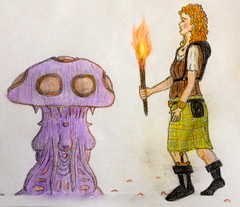
This rustic look of Halfling garb is supplemented by trappings of Brethic origin like the checked kilt and the torc. Halfling militia of Hinhome wear leather armour and wooden shield and wield short sword and stone slings (of which they are very fond). Some however ride pony-drawn war-carts and wield spears. Halfling clothing is practical and modest while also suggestive of comfort and affluence.
Food
Halflings tend to have the same food as the Humans they share lands with. However one invention of Halfings is the pie. They are particularly renowned for the making of a pie topped with mashed roots and filled with mushrooms. They also enjoy sweet things like honeyed seed-cakes and mead. They drink tisanes of hot water and herbs. Finally they will often follow a meal with the smoking and inhaling of the dry powdered hackberry - an export of Hinhome of growing popularity.
Reproduction
Halfling courtship standards are very similar to those of Humans of the more reserved and private sort. Indeed the average Halfling is coy on the topic of sex and utilizes all manner of euphemisms if the topic must be discussed at all. Halflings prefer small families of one to three children and focus on giving those few children as decent a life and livelihood as they can.
The Fulsome
Halflings and Humans can have children but this is rare and considered controversial. Any child resulting from such a liaison will grow to become a normal-sized Human who is assumed to be Brethic. Any children they have are also Human. Such 'fulsome' children living among Halflings tend to find life difficult as they grow - even if prejudice is curbed they still have practical issues with the size of furniture! By adulthood they will have left to find a new life among Humans.
posted by Dan | 8.5.06


<< Home